


Navigating SEO in London’s Fast-Paced 2024 Scene
By Gabrio Linari, Last Updated on 24 February 2025
With over a decade of SEO experience and more than six years living in London, I’ve seen firsthand the unique challenges and opportunities this city presents. London has always been the fastest city in Europe. Back then, SEO was relatively simple and quite “hot”, those were completely different times. You could quickly implement strategies and make business owners happy. But today, the landscape has changed dramatically, and here’s what’s happening in the field now:
“I worry about content performance… AI is another big one… trying to keep up with everything is like going against a freight train coming after you… Everyone’s pushing boundaries and it feels you’re always in a race against others and Google.”
We could continue, but you get the gist, right? If this resonates with you, you’re not alone. These are the thoughts of many London business owners today. Given this, I’ll offer practical advice to tackle these worries head-on and show you how to stay ahead in the super-competitive London SEO market.
What’s Changing in London’s SEO Scene?
London and the UK are typically second in line after the US when it comes to adopting new English-market trends (some colleagues might differ, but traditionally, this has been the case). What gets launched in the US often reaches the UK and London within weeks or months. A glaring example is the AI overviews. Just recently, I was fielding frantic questions about how to disable them because, put simply, people hate them (Google, are you listening?).
During the pandemic, businesses were eager to push all resources online because, well, everything was bloody closed. This led to oversaturation, and the bigger players only got bigger. Now, with more competition, the slice of the pie is smaller. And that’s when AI entered the picture at incredible speed.
AI can be both a blessing and a curse. I’m deeply involved in new AI projects these days, but responsible use of AI is essential, especially among London businesses. There’s a growing belief that you can “AI everything” or “just AI it,” but it’s not that simple. We all know the power of AI in processing vast amounts of data and automating tasks, it’s frankly quite scary what it can do. But let’s not forget, AI is not good at creativity, and it never will be. That’s where humans come in, and we need to remember that.
According to a report by McKinsey, UK companies that invest in AI-driven marketing strategies are seeing a revenue uplift of 3- 15% and a sales ROI uplift of 10-20%.
Big eCommerce players in London, like ASOS, TKMaxx, and Boohoo, can leverage AI in various ways, particularly in programmatic SEO and product recommendations. I’ve written about this in another article, AI-Enhanced Product Discovery and Recommendations in Ecommerce, and it’s totally relevant. But again, it’s just one part of the game. As I said in that article, we still have to think creatively.
Top SEO Concerns for London Businesses (And How to Tackle Them)
I was recently discussing with a large company how to choose an SEO agency in London because their content wasn’t performing as expected. The conversation quickly turned to whether they needed a content production agency or a true partner to help with strategy or both. That’s a question that can go in many directions when it comes to London’s fast-paced business environment
To make sure your content is truly resonating with your audience, it’s crucial to go beyond surface-level keyword research. Dive into what your target customers are actually searching for, their pain points, and the questions they frequently ask. Utilize tools like AnswerThePublic, or even Google Autocomplete, to see what’s trending in your industry. Creating content that directly answers these questions is not only great for SEO but also positions your brand as a trusted resource. Match that to Aleyda’s great EEAT questionnaire.
Another small business asked me how to create an effective local SEO strategy for London, which is another crucial question. Staying ahead of competitors is vital, especially for smaller businesses facing even more pressure in 2024, considering Google’s bias towards larger brands. What did we learn from Google’s recent leak? A few key takeaways were: focus on PR, mentions, citations, fewer authors rather than more, and aligning your dates with XML data. But how can a small business owner implement this? It can get complex quickly, so it’s best to get expert help – you can get in touch, at least for strategy.
Creating an Effective Local SEO Strategy for London
As a small business owner in London, it might feel overwhelming to compete with larger, more established brands, especially when Google tends to favour them. However, a strong local SEO strategy can level the playing field. Focus on hyper-local keywords that your competitors might overlook, like specific neighbourhood names or landmarks near your business. Additionally, make sure your business information is accurate and consistent across all local directories and your Google My Business profile. Engage with your community online by participating in local events and sharing those experiences on your website and social media channels.
No Panic. Revenue is lower YoY these days, and losing brand traffic is another pain point for London businesses—it’s really affecting organic growth. So, how do you make your content work harder?
One way to make your content work harder is by continually updating and optimizing existing content. This is often quicker and more effective than constantly churning out new content. For example, revisit older blog posts that still get traffic and update them with the latest information, new keywords, and fresh internal links. Another strategy is to create evergreen content pieces that remain relevant over time, like how-to guides or industry best practices. These pieces can be periodically refreshed and repurposed, keeping them valuable for both search engines and your audience
The AI wave can definitely feel overwhelming. I wanted to drop a link to my friend Cien, an AI consultant who helps businesses understand AI (and its limitations). We’ve partnered on my new product, ROCKY IV. AI can be your assistant, not your scary boss. That’s the mindset we need to adopt. Interesting ways to leverage AI include analyzing large data sets for social media trends and enhancing influencer-led campaigns. Yes, we still need the YouTubers!
Practical Tips for SEO Success in London
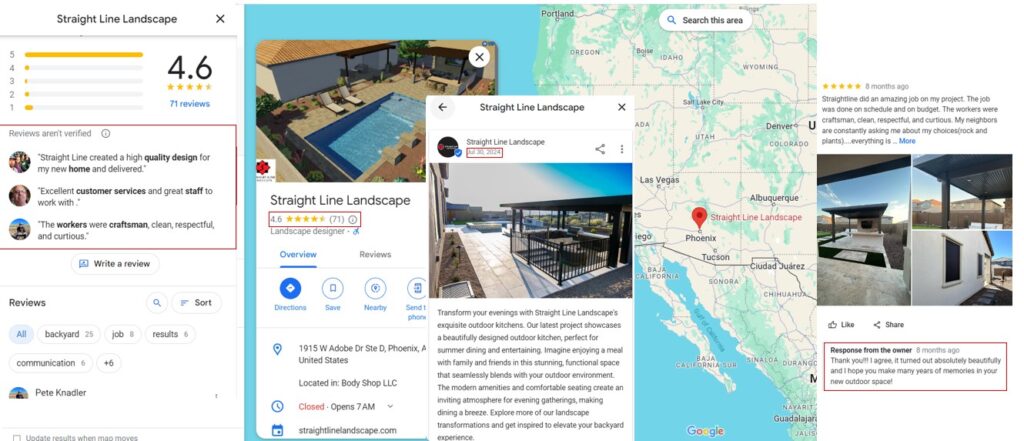
When it comes to optimizing for local searches in London, think of Google My Business as your digital storefront. Make sure your GMB (and Bing Places too!) profile is complete, accurate, and regularly updated with posts about special offers, new products, or events happening in your area. The more active your profile, the more Google & Bing (and potential customers) will notice. Encourage customers to leave reviews by making it as easy as possible: send follow-up emails after a purchase with a direct link to your review page.
Below an example from my client Straight Line Landscape‘s GMB.
If someone asked me how to choose the best London SEO consultant, I’d start by questioning whether you’re looking for someone with a physical presence in London for regular in-person meetings or just someone with expertise in the local market. I’m well-versed in the local market, even though I don’t live in London permanently. If regular in-person meetings are important, opt for someone local. If location doesn’t matter, focus on finding someone reliable and experienced. You wouldn’t call a plumber who doesn’t show up, right? Different story in Croatia but I digress.
Another key factor in a local SEO strategy in London is focusing on the post-Brexit reality and loss of business to EU customers (if that affected your company).
According to a detailed analysis by the London School of Economics, the number of UK trade relationships with the EU has fallen by approximately 30% since the Brexit vote, particularly affecting small and medium-sized enterprises (SMEs) that relied on low-value export relationships.
EU customers are now purchasing elsewhere. For instance, I recently ordered a product from the UK, and the customs fees were 50% of the product price! Will I order from the UK again? Probably not. The customer service was excellent, in fact they refunded me the customs fees. But would most people go to that effort? This is why focusing on your local SEO strategy for the UK is more critical than ever.
The Future of SEO for London Businesses
The landscape is rapidly evolving, and the velocity can be scary. Businesses should stay adaptable for navigating SEO in London and I’ll quote Douglas Squirrel, who recently inspired me: “Make volatility your friend.” This advice perfectly encapsulates the times we’re living in. Focus on optimizing the processes you have, and leverage the talent and tools available to you. If you can’t invest in new resources or hires, get creative with what you have.
There’s a general sense of economic uncertainty right now, but that doesn’t mean London businesses should stand still. In 2024 (and also in 2025), focus on:
• Saving costs by optimizing existing processes and cutting unnecessary expenses.
• Retaining customers through exceptional service and personalized experiences.
• Optimize processes by automating repetitive tasks where possible (yes, use AI for this, or an AI co-pilot!), freeing up resources for more strategic initiatives.
• Differentiating yourself by having an unique value proposition and ensuring it’s clear in all your marketing efforts.
Ready to Take on, London?
We’ve touched on several key topics, and I hope this provided some inspiration for London businesses. Adaptability and innovation are key, while remaining vigilant about what’s within our immediate control. Don’t try to control what’s uncontrollable. Instead, focus on your strengths: develop your passions, get mentioned in the right places, and leverage your network to stay ahead.
London’s SEO landscape might be challenging, but it’s also full of opportunities for those who are willing to adapt and innovate. Remember, SEO isn’t a one-time fix; it’s an ongoing process that requires commitment, creativity, and a willingness to learn. Keep pushing the boundaries, stay focused on delivering great value to your customers, and don’t be afraid to seek out expert help when you need it. The race may be intense, but with the right strategy, you’ll lead the pack.
About The Author
I have over 15 years of professional experience spanning SEO, strategic digital transformations, and business growth initiatives. My expertise lies in aligning SEO efforts with business goals to drive meaningful results. I regularly post on LinkedIn about Growth Marketing, remote work, and inspirational topics. Check out my latest posts on Gabrio’s Thoughts, and features on ROCK SEO YouTube channel. You can discover more about me here.